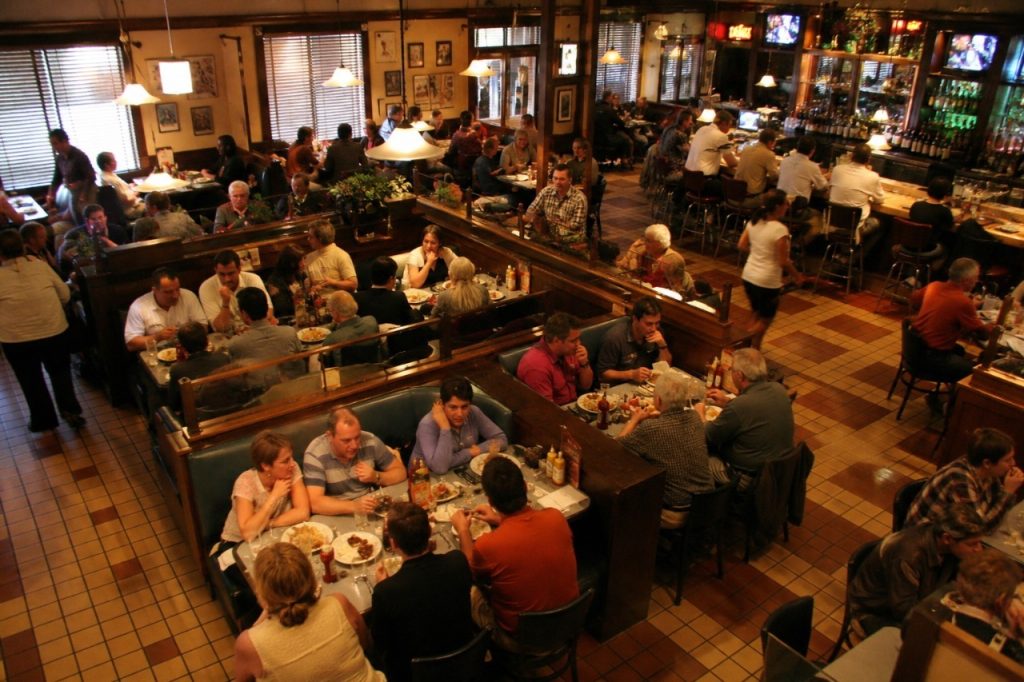
Restaurants shaped my life long before I ever thought about business models or customer visit frequency.
As a teenager, I was a line cook at Chi-Chi’s Mexican restaurant and a roadie for my dad’s rock band. Later, I worked in various roles in restaurants and live entertainment, from dishwasher at Sizzler to singing, dancing, in-character server at the retro-style diner Ed Debevic’s. I’ve served in high-end fine dining establishments and hosted stand-up shows in local dive bars, often in the same night.
I thought I had seen it all. But as restaurants re-opened post-pandemic, I saw something new—something that bothered me.
Dining rooms changed. Not physically, but emotionally. People had grown used to living behind screens. Delivery had exploded. Remote work reshaped routines.
Suddenly restaurants weren’t just competing with other restaurants. They were competing with people’s couches. And the old strategies—promotions, coupons, loyalty cards—were no longer resonating. It became clear to me that in order for restaurants to survive, something had to change.
47% of adults pick up take-out at least once a week
Customer experience = visit frequency
I thought back to my early restaurant days. I remembered the excitement and energy that’s created when people gather in communal spaces, whether they’re sharing a meal, enjoying a performance, or participating in a time-honored ritual. And it hit me.
In most restaurants and bars, people weren’t just there for the food. They were there for the experience.
Here’s one of my favorite examples: years ago on a Monday night, I was hosting a trivia show for around 140 guests at a beer garden. About an hour in, it started raining. I was under cover, but the teams weren’t. But we kept going. Not a single team left despite the downpour, because this was their night, their ritual.
That’s what a room that’s alive feels like. People stay because they want to be there, not because they have to be. That’s when the idea for Loyalty Untapped™ started taking shape in my mind.
Reviving restaurant rituals
If restaurants and bars had infrastructure to help them build that kind of loyalty and connection, that could be the game-changer in this new reality.
Even though the pandemic transformed many aspects of hospitality, entertainment is still part of the economics of a restaurant, and dining rooms are still more than just places to eat. They’re spaces where people can gather, form communities, establish rituals, and have experiences they can’t get anywhere else.
My years in the industry taught me that a good restaurant has good food and good service, but a great restaurant feeds the soul and the body. It’s thriving, busy, full of laughter and belonging, with staff who feel proud and customers who feel like they’re part of something instead of just completing a transaction.
That’s the kind of dining room I want to see more of in the world. That’s the kind of dining room I want to help restaurants create.
Learn more
If your brand wants to increase repeat visits, focus less on convincing customers and more on designing behavior. Build the rituals, social connections, and progress systems that make returning feel natural.
Start by asking: what would make coming back the easiest, most rewarding choice for your guests?